
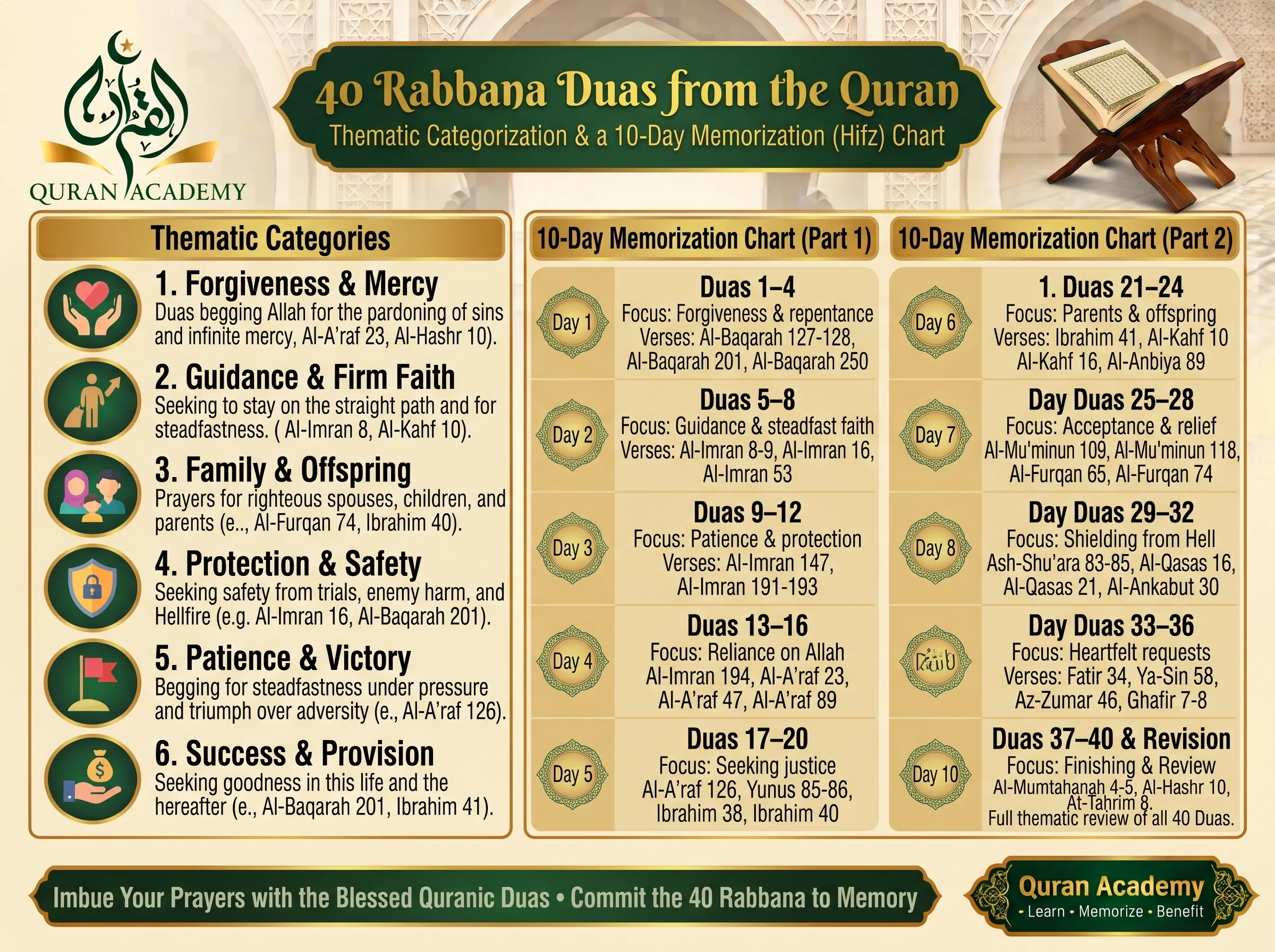
✦ Quick Answer & Key Takeaways: The 40 Rabbana Duas From the Quran
Mastering the 40 Rabbana Duas from the Quran equips every Muslim with the exact, divinely revealed words spoken by the Prophets, angels, and righteous believers across human history. Beginning directly with the intimate invocation رَبَّنَا (Rabbanaa — "Our Lord!"), these 40 comprehensive Quranic supplications cover every human need: steadfastness of the heart, forgiveness of sins, righteous spouses and children, relief from hardship, and protection from the Fire. In our 1-on-1 Online Quran Memorization (Hifz) Program, adults and children memorize all 40 Rabbana Duas in just 10 days by learning 4 short, one-line Duas per day grouped by theme!
- Why They Omit "Yaa" (يا): In Arabic rhetoric, dropping the calling particle Yaa before Rabbanaa expresses immediate closeness to Allah, Who hears the quietest whisper of the heart.
- Why Use the Plural "Our Lord" (Rabbanaa) Even When Praying Alone? Praying in the plural unites you with the entire Ummah of believers and reflects humility before the Creator.
- The Prophet's (ﷺ) Most Frequent Dua (Sahih al-Bukhari 6389): Rabbanaa aatinaa fid-dunyaa hasanatan wa fil-aakhirati hasanatan wa qinaa 'adhaaban-Naar (Surah Al-Baqarah 2:201).
- Permissible Inside Sujood & Tashahhud: Scholars agree that reciting these 40 Quranic verses in prostration and before Salam with the intention of Dua (supplication) is highly rewarding!
Have you ever bowed down into prostration (Sujood)—the moment when a servant is closest to their Lord—or raised your hands after prayer, only to find yourself repeating the same two or three basic requests because you could not find the right words to express everything in your heart?
The greatest gift of the Quran is that Allah Almighty did not only command us to call upon Him; He personally taught us the most eloquent, comprehensive words to say! Just as we explored the daily shield in our Morning and Evening Adhkar Authentic List and the three accepted petitions at the end of Surah Al-Baqarah (2:285–286), the 40 Rabbana Duas gather the finest prayers of Adam, Ibrahim, Isma'il, Musa, Shu'ayb, the Companions of the Cave, and Prophet Muhammad (peace be upon them all). Yet trying to memorize a random list of 40 ungrouped verses often overwhelms beginners. Below, we organize all 40 Rabbana Duas into 4 Thematic Clusters of 10, explain their linguistic secrets, and give you a 10-Day Memorization Schedule.
- 3 Linguistic & Spiritual Secrets of "Rabbana" in the Quran (Why "Yaa" Is Omitted!)
- Directory Part 1 (Duas 1 to 20): Acceptance, Guidance, Steadfastness & Family
- Directory Part 2 (Duas 21 to 40): Forgiveness, Relief From Trials & Protection From Hellfire
- The 10-Day Memorization Plan (How to Master 4 Rabbana Duas Per Day)
- 4 Essential Tajweed Rules When Reciting the 40 Rabbana Duas
- Frequently Asked Questions (FAQs)
1. Three Linguistic & Spiritual Secrets of "Rabbana" in the Quran
As we teach in our Complete Quran Tafseer Guide and our Quranic Arabic Grammar Guide, look at why every single prophetic supplication in the Quran chooses the title رَبَّنَا (Rabbanaa) or رَبِّ (Rabbi):
- 1. Why "Rabb" (Lord/Nurturer) Is Chosen for Dua: Derived from the root ر-ب-ب (to nurture, sustain, and care for step by step), calling upon Allah as Rabb invokes the very attribute of His nurturing care and provision!
- 2. Why the Vocative Particle "Yaa" (يا) Is Dropped: In Arabic grammar, you say Yaa Fulaan when calling someone at a distance. Across the Quran, believers drop Yaa and say رَبَّنَا (Rabbanaa!) directly to express that Allah is near and immediately responsive!
- 3. The Most Comprehensive Dua in the Sunnah (Sahih al-Bukhari 6389): As verifiable in our Online Hadith Explorer, Anas ibn Malik (RA) reported that the supplication Prophet Muhammad (ﷺ) made more than any other was Surah Al-Baqarah (2:201): رَبَّنَا آتِنَا فِي الدُّنْيَا حَسَنَةً وَفِي الْآخِرَةِ حَسَنَةً وَقِنَا عَذَابَ النَّارِ—because "Hasanah in this world" encompasses health, halal provision, beneficial knowledge, and a righteous family, while "Hasanah in the Hereafter" encompasses Allah's pleasure and Paradise!
2. Directory Part 1 (Duas 1 to 20): Acceptance, Steadfastness & Righteous Family
You can read the full Uthmani script and listen to the audio of every verse below in our Online Uthmani Quran Explorer. Here are the first 20 Rabbana Duas, organized into two thematic clusters of 10:
| Dua # & Ref | Opening Arabic Anchor Phrase | Core Petition & When to Recite It |
|---|---|---|
| CLUSTER 1 (DUAS 1 – 10): ACCEPTANCE OF DEEDS, GUIDANCE & STEADFAST HEARTS | ||
| #1 – #2 (2:127–128) |
رَبَّنَا تَقَبَّلْ مِنَّا ... رَبَّنَا وَاجْعَلْنَا مُسْلِمَيْنِ لَكَ | Ibrahim & Isma'il's prayer while raising the Ka'bah: asking Allah to accept our good deeds, make us and our offspring devoted Muslims, and teach us our rites. |
| #3 (2:201) |
رَبَّنَا آتِنَا فِي الدُّنْيَا حَسَنَةً وَفِي الْآخِرَةِ حَسَنَةً | The all-inclusive Prophetic prayer for goodness in this world, goodness in the Hereafter, and protection from the Fire. |
| #4 – #5 (3:8–9) |
رَبَّنَا لَا تُزِغْ قُلُوبَنَا بَعْدَ إِذْ هَدَيْتَنَا ... إِنَّكَ جَامِعُ النَّاسِ | Prayer of those firmly rooted in knowledge: asking Allah never to let our hearts deviate after guidance and to grant us mercy from His presence. |
| #6 – #8 (3:16, 53 & 5:83) |
رَبَّنَا إِنَّنَا آمَنَّا ... فَاكْتُبْنَا مَعَ الشَّاهِدِينَ | Declaring faith in Allah's revelation and Messenger, asking for forgiveness and to be inscribed among the truthful witnesses. |
| #9 – #10 (18:10 & 20:45) |
رَبَّنَا آتِنَا مِن لَّدُنكَ رَحْمَةً وَهَيِّئْ لَنَا مِنْ أَمْرِنَا رَشَدًا | Prayer of the Youths of Surah Al-Kahf (18:10) & Musa/Harun (20:45) for special mercy and right guidance during overwhelming trials. |
| CLUSTER 2 (DUAS 11 – 20): PARENTS, SPOUSES, RIGHTEOUS CHILDREN & BROTHERHOOD | ||
| #11 (25:74) |
رَبَّنَا هَبْ لَنَا مِنْ أَزْوَاجِنَا وَذُرِّيَّاتِنَا قُرَّةَ أَعْيُنٍ | Prayer of the Servants of Ar-Rahman: asking for spouses and offspring who are the comfort and delight of our eyes, and to make us leaders of the righteous! |
| #12 – #14 (14:38, 40, 41) |
رَبَّنَا وَتَقَبَّلْ دُعَاءِ • رَبَّنَا اغْفِرْ لِي وَلِوَالِدَيَّ وَلِلْمُؤْمِنِينَ | Ibrahim's closing prayers in Surah Ibrahim: asking Allah to accept our Dua and forgive us, our parents, and all believers on the Day of Reckoning! |
| #15 (59:10) |
رَبَّنَا اغْفِرْ لَنَا وَلِإِخْوَانِنَا الَّذِينَ سَبَقُونَا بِالْإِيمَانِ | The prayer of pure brotherhood: asking Allah to forgive those who preceded us in faith and never let any resentment (Ghill) enter our hearts toward believers! |
| #16 – #18 (40:7–9) |
رَبَّنَا وَسِعْتَ كُلَّ شَيْءٍ رَّحْمَةً وَعِلْمًا ... وَأَدْخِلْهُمْ جَنَّاتِ عَدْنٍ | The angels' prayer for believers and their righteous parents, spouses, and children to be united together in the Gardens of 'Adn! |
| #19 – #20 (2:129 & 5:114) |
رَبَّنَا وَابْعَثْ فِيهِمْ رَسُولًا ... وَارْزُقْنَا وَأَنتَ خَيْرُ الرَّازِقِينَ | Prayers for prophetic knowledge, purification, and blessed sustenance from the Best of Providers. |
3. Directory Part 2 (Duas 21 to 40): Forgiveness, Patience in Trials & Deliverance
Here are the remaining 20 Rabbana Duas (Clusters 3 and 4)—covering repentance, patience under pressure, and deliverance from wrongdoing and the Fire:
| Dua # & Ref | Opening Arabic Anchor Phrase | Core Petition & When to Recite It |
|---|---|---|
| CLUSTER 3 (DUAS 21 – 30): REPENTANCE, PARDON FOR SLIPS & PATIENCE IN HARDSHIP | ||
| #21 (7:23) |
رَبَّنَا ظَلَمْنَا أَنفُسَنَا وَإِن لَّمْ تَغْفِرْ لَنَا وَتَرْحَمْنَا | The repentance prayer of Adam & Hawwa (AS): admitting our own wrongdoing and seeking Allah's forgiveness and mercy. |
| #22 – #24 (2:286a, b, c) |
رَبَّنَا لَا تُؤَاخِذْنَا ... وَلَا تَحْمِلْ عَلَيْنَا إِصْرًا ... وَلَا تُحَمِّلْنَا | The 3 crowning petitions at the end of Surah Al-Baqarah—where Allah responded to each one: "I have already granted it!" |
| #25 – #27 (2:250, 3:147, 7:126) |
رَبَّنَا أَفْرِغْ عَلَيْنَا صَبْرًا وَثَبِّتْ أَقْدَامَنَا | Pouring abundant patience (Sabr) over our hearts, making our feet firm in trials, forgiving excesses, and causing us to die as Muslims! |
| #28 – #30 (23:109, 60:4–5) |
رَبَّنَا عَلَيْكَ تَوَكَّلْنَا وَإِلَيْكَ أَنَبْنَا وَإِلَيْكَ الْمَصِيرُ | Ibrahim's prayer of total reliance (Tawakkul), repentance (Inabah), and protection from being a trial for wrongdoers. |
| CLUSTER 4 (DUAS 31 – 40): DELIVERANCE FROM OPPRESSION & PROTECTION FROM HELLFIRE | ||
| #31 – #34 (4:75, 7:47, 89, 10:85) |
رَبَّنَا لَا تَجْعَلْنَا مَعَ الْقَوْمِ الظَّالِمِينَ • افْتَحْ بَيْنَنَا... بِالْحَقِّ | Prayers of Musa, Shu'ayb, and the oppressed for righteous deliverance, just judgment (Al-Fatihin), and safety from tyranny. |
| #35 – #39 (3:191–194 & 25:65) |
رَبَّنَا مَا خَلَقْتَ هَٰذَا بَاطِلًا ... رَبَّنَا اصْرِفْ عَنَّا عَذَابَ جَهَنَّمَ | The 5 closing prayers of Ulul-Albab in Surah Al 'Imran + Surah Al-Furqan (25:65): reflecting on creation, seeking protection from Hellfire, and dying with the righteous (Al-Abrar)! |
| #40 🏆 (66:8) |
رَبَّنَا أَتْمِمْ لَنَا نُورَنَا وَاغْفِرْ لَنَا ۖ إِنَّكَ عَلَىٰ كُلِّ شَيْءٍ قَدِيرٌ | The believers' final prayer on the Bridge (As-Sirat) on Judgment Day: asking Allah to perfect our light all the way into Jannah! |
Mastering the Crisp Qalqalah in "Habْ Lanaa", "Wajْ'alnaa" & "Afْrigh"
Look at the most beloved family Rabbana Dua in Surah Al-Furqan (25:74): رَبَّنَا هَبْ لَنَا... وَاجْعَلْنَا لِلْمُتَّقِينَ إِمَامًا! Both هَبْ (Habْ) and وَاجْعَلْنَا (Wajْ'alnaa) contain a mid-word Qalqalah Sughra on Baa (بْ) and Jeem (جْ)! Watch Senior Instructor Ustadhah Yasmeen Gamal demonstrate on our Quran Academy YouTube Channel:
- Gentle Mid-Line Bounce: Keep Habْ lanaa voiced so the Baa never turns into an English "P".
- 1-on-1 Live Coaching: Perfect your Quranic Duas and Tajweed with our Al-Azhar scholars!
4. The 10-Day Memorization Plan (How to Master 4 Rabbana Duas Per Day)
By applying our 3x3 Quran Memorization Method and the Sabaq, Sabqi & Manzil Revision System, your family can memorize 4 short Rabbana Duas every day and recite each day's 4 Duas in the prostrations of your 5 daily prayers:
Struggling to perfect your Recitation?
Join hundreds of students mastering the Quran with our Verified Al-Azhar Graduates. We offer flexible 1-on-1 sessions tailored to your schedule.
Book a Free Evaluation Class →- Days 1 & 2 (Duas 1 – 8): Master the Ka'bah acceptance Duas (2:127–128), Rabbanaa aatinaa fid-dunyaa hasanah (2:201), and the steadfastness Duas of Surah Al 'Imran (3:8, 9, 16, 53).
- Days 3 & 4 (Duas 9 – 16): Master the cave mercy Dua (18:10), the family delight Dua (25:74), Ibrahim's parents Dua (14:41), and the pure brotherhood Dua (59:10).
- Days 5 & 6 (Duas 17 – 24): Master the angels' Jannah Dua (40:7–9), Adam's repentance Dua (7:23), and the 3 concluding Duas of Surah Al-Baqarah (2:286).
- Days 7 & 8 (Duas 25 – 32): Master the 3 patience-and-firm-feet Duas (2:250, 3:147, 7:126) and Ibrahim's Tawakkul Duas (60:4–5).
- Days 9 & 10 (Duas 33 – 40): Master the 5 closing Duas of Surah Al 'Imran (3:191–194), the Hellfire shield (25:65), and the Light of Judgment Day seal (66:8)!
5. Four Essential Tajweed Rules When Reciting the 40 Rabbana Duas
Before reciting these 40 gems in your prayers tonight, check your pronunciation against these four rules from our 1-on-1 Online Tajweed Course and our Interactive Tajweed Encyclopedia:
- 1. Heavy Raa + Firm Baa Shaddah + 2-Beat Natural Alif in "Rabbanaa" (رَبَّنَا): According to our Heavy & Light Letters Guide and Rules of Madd, start with a heavy Raa (رَ), press the Shaddah on the Baa (بّ) firmly, and give the final Alif (نَا) an exact 2-beat natural elongation (or 4–5 beats when followed by a Hamzah like Rabbanaaa aatinaa / Rabbanaaa innanaa!).
- 2. Light Raa on "Waghfirْ Lanaa" vs. Heavy Raa on "Warhamnaa": Whenever a Rabbana Dua ends with وَاغْفِرْ لَنَا وَارْحَمْنَا (such as 2:286 and 7:23), keep the Raa in Waghfirْ light (Tarqeeq) because of the Kasrah before it, and keep the Raa in Warْhamnaa heavy (Tafkhim) because of the Fatha before it!
- 3. Idgham Mutajanisayn in "Irkam-ma'anaa" & Throat Letters: Using our Makharij al-Huruf Guide, Sifaat al-Huruf Guide, Noon Sakinah Rules, and Meem Sakinah Rules, keep the throat غْ (Ghayn) in لَا تُزِغْ قُلُوبَنَا (3:8) distinct from the Qaaf right after it without merging them!
- 4. Stopping Properly on Ibrahim's "Du'aa'" (14:40) & Waqf Landmarks: Following our Rules of Waqf Guide, when stopping on وَتَقَبَّلْ دُعَاءِ (14:40), stop on a silent Hamzah after a 4-to-6 count Madd Wajib Muttasil (Du'aaaa'ْ)! Test your Tajweed accuracy right now on our Free 3-Minute Tajweed Quiz!
Once your family masters the 40 Rabbana Duas (recognizing dozens of words from our Top 50 High-Frequency Quranic Words!), weave them into your daily prayers alongside our Salat Al-Istikharah Guide, Sujood As-Sahw Guide, Salat Al-Janazah Guide, Ayatul Kursi Guide, 3 Quls Guide, Surah Ad-Duha & Ash-Sharh Guide, 14-Day Surah Maryam Plan, 30-Day Surah Yusuf Schedule, Surah Luqman Parenting Guide, Surah Al-Hujurat Manners Guide, and Friday Fajr Surahs Guide! Whether you are learning with our Al-Azhar Certified Tutors or motivating your child in our 1-on-1 Kids Quran Classes with our Printable Kids Star Chart, read how families rate their progress on our Verified Student & Parent Reviews Page!
6. Frequently Asked Questions (FAQs) About the 40 Rabbana Duas
1. Why do the Rabbana Duas in the Quran begin directly with "Rabbana" instead of "Yaa Rabbana"?
Classical scholars of Arabic rhetoric (Balaghah) explain that in Arabic grammar, the vocative particle يَا (Yaa) is used to call someone at a distance. Omitting Yaa and calling out directly with رَبَّنَا (Rabbanaa — "Our Lord!") expresses extreme spiritual closeness and intimacy with Allah Almighty, Who is nearer to His servant than anything else.
2. Which Rabbana Dua was recited most frequently by Prophet Muhammad (ﷺ)?
According to Anas ibn Malik (may Allah be pleased with him) in Sahih al-Bukhari (6389) and Sahih Muslim (2690), the supplication recited most frequently by the Prophet (ﷺ) was Surah Al-Baqarah (2:201): رَبَّنَا آتِنَا فِي الدُّنْيَا حَسَنَةً وَفِي الْآخِرَةِ حَسَنَةً وَقِنَا عَذَابَ النَّارِ.
3. Can I recite the 40 Rabbana Duas during Sujood (prostration) in prayer?
Yes! While reciting the Quran with the intention of Tilawah is prohibited in Ruku' and Sujood, scholars across all four Sunni schools agree that reciting Quranic supplications like the 40 Rabbana Duas in Sujood and at the end of the Final Tashahhud with the intention of Dua (supplication) is completely permissible and highly virtuous.
4. How can my family memorize all 40 Rabbana Duas easily?
By grouping the 40 Rabbana Duas into 4 thematic clusters of 10 Duas each and memorizing just 4 short one-line Duas per day using our 10-Day Memorization Schedule, both adults and children can master all 40 supplications in 10 days.
5. Which Surahs contain the highest number of Rabbana Duas?
Surah Al 'Imran (Chapter 3) and Surah Al-Baqarah (Chapter 2) contain the highest concentration of Rabbana Duas in the Mushaf, followed by Surah Ibrahim (Chapter 14), Surah Al-A'raf (Chapter 7), and Surah Al-Mu'minun (Chapter 23).
Master the 40 Rabbana Duas & Quranic Tajweed With an Al-Azhar Scholar!
Want yourself or your children to memorize all 40 Rabbana Duas in 10 days with flawless Tajweed and deep heart connection? Book your free 1-on-1 evaluation session with our male or female Al-Azhar scholars today!
Book Your Free 1-on-1 Trial Class →